Behind the Rack: What I Learned Exploring Real IT Infrastructure During My Internship
A look at what it's really like working with a server room, network equipment, and enterprise systems — and why hands-on exposure teaches things a classroom can't.
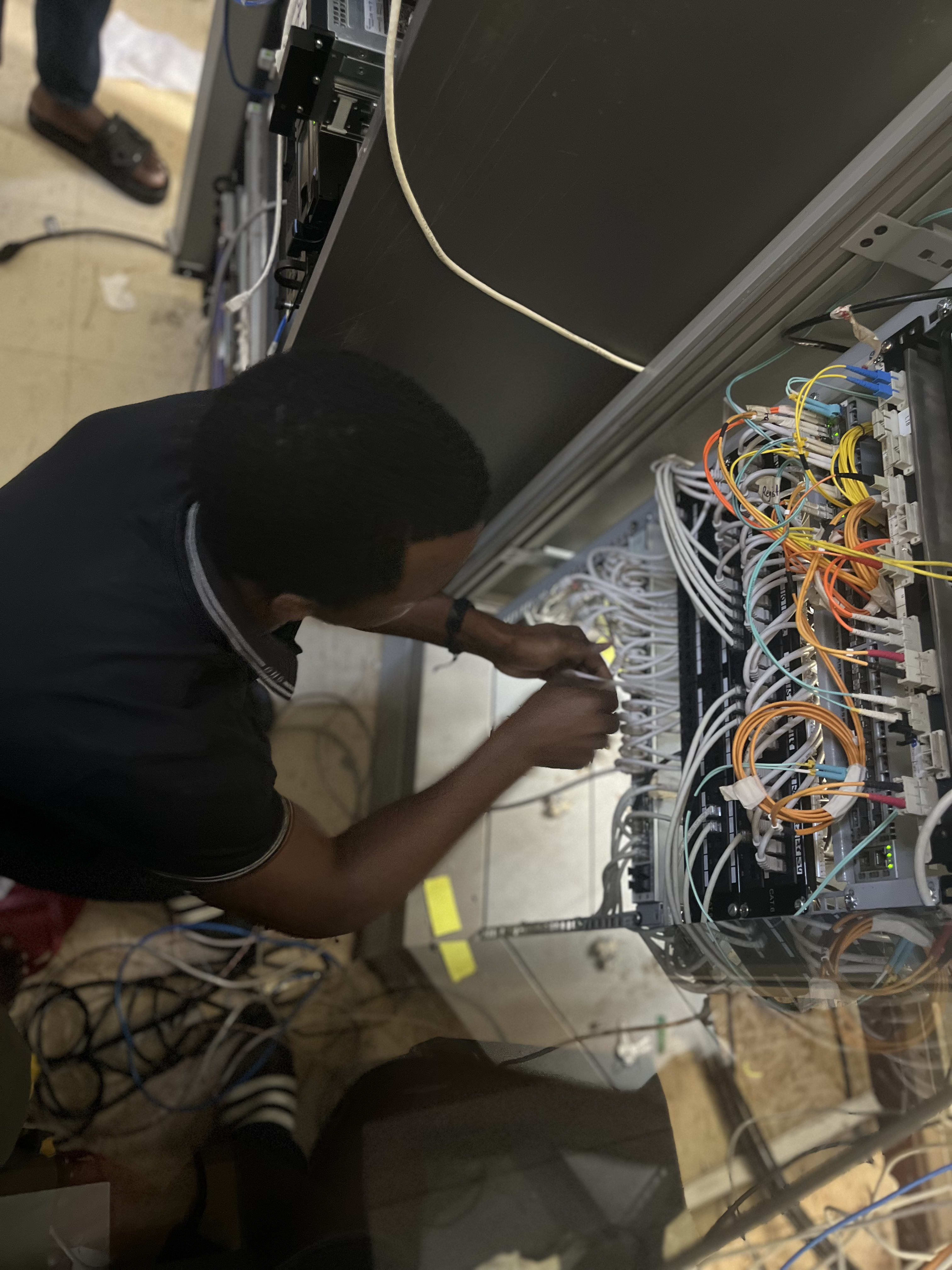
One of the biggest gaps between studying computer science and working in the field is exposure to real infrastructure. Diagrams and lecture slides can only take you so far, there's a different kind of understanding that comes from standing in a server room, tracing cables, and seeing how systems actually connect. During my internship, I've had the chance to work directly with IT infrastructure that keeps organizations running day to day. What I Worked With
Server room, seeing how servers are racked, cooled, and organized in a live environment Network equipment, switches, routers, and patch panels, and how they route traffic across a building or organization Cabling, the unglamorous but critical work of structured cabling, and how poor cabling practices can cause real downstream problems Enterprise systems, how servers, storage, and networking work together to support the applications a business depends on
Why This Matters In a classroom, networking is often taught in isolation, you learn the OSI model, subnetting, or how DNS resolves a name to an IP address. But in production, none of these concepts exist alone. A network issue might be a bad cable, a misconfigured switch port, or a DNS problem three layers away from where the symptom shows up. Learning to trace a problem across all these layers is a skill you can only build through practice.
Key Takeaways Documentation matters, in a real environment, undocumented changes cause chaos for the next person troubleshooting. Small things break big systems, a loose cable or an overlooked config setting can bring down services relied on by hundreds of people. Troubleshooting is a skill, not a fact you memorize, it's built through repetition, curiosity, and asking the right questions.
Looking Ahead Every day in this internship pushes me closer to the engineer I want to become, someone equally comfortable writing code, managing cloud infrastructure, and understanding the physical systems underneath it all. I'm grateful for the mentors and professionals patient enough to explain the "why" behind what they do.